August 10, 2026
Perseids 2026: The Best Meteor Shower in a Decade Peaks This Week
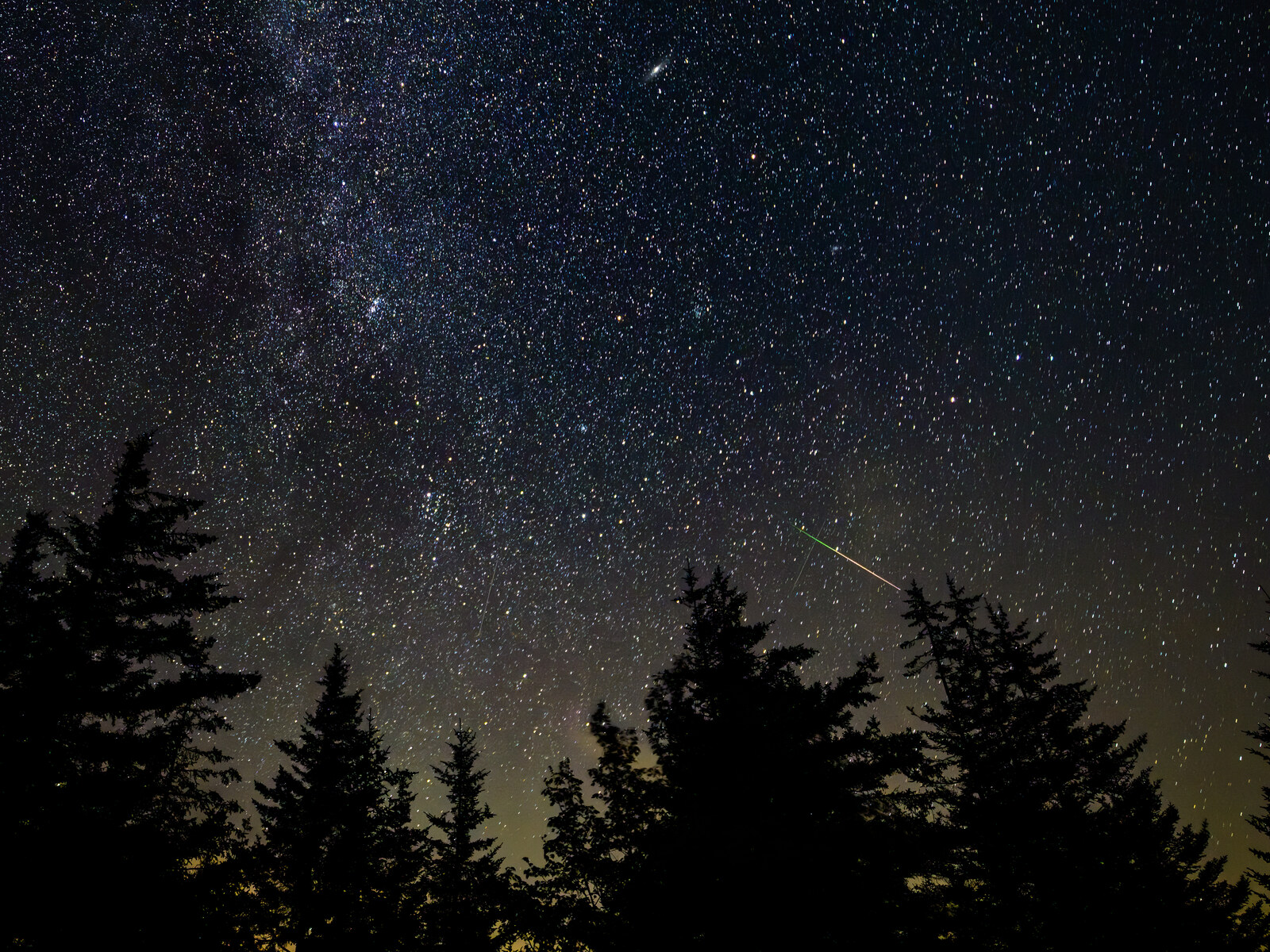
Most years, we would tell you the Perseids are lovely and you should try to catch a few. This year we are going to be more insistent than that, because 2026 is the best Perseid shower in about a decade, and it peaks in the next 72 hours.
The reason is boring and enormous: the moon. The Perseids are always good — they are the most reliable meteor shower of the year and they conveniently peak in warm weather, unlike the Geminids, which peak in December and require thermal underwear and a personality disorder. But most years a bright moon washes out everything except the fireballs.
This year the peak lands on a new moon. The sky goes fully dark not long after sunset and stays that way until dawn. Under genuinely dark skies, NASA puts the rate at up to 100 meteors per hour at peak. That is not a "we saw three and one might have been a plane" night. That is a night you remember.
When, Exactly
The peak falls on August 12–13, with maximum activity predicted for the early hours of the 13th. In practice, plan for the overnight of Tuesday, August 11 into Wednesday the 12th, or Wednesday the 12th into Thursday the 13th. Both nights will be excellent.
Now the part people get wrong: the good hours are after midnight. Ideally between 2 a.m. and dawn.
The reason is genuinely satisfying. Before midnight, you are on the trailing side of Earth as it moves through the debris stream, so meteors have to catch up to you. After midnight you rotate onto the leading edge — the windshield rather than the rear window — and you plow straight into the stream. Rates can multiply several times over between 11 p.m. and 3 a.m.
So yes, this is a nap-then-drive situation. Sleep from 9 to 1, then go. We are not going to pretend otherwise.
Where to Go From North Jersey
Bergen County sits under some of the worst light pollution in the country. You will see a handful of the brightest meteors from a backyard in Ridgewood, and you will see fifty times more an hour and a half west. The drive is the entire difference.
Jenny Jump State Forest, Hope, NJ — about 1 hour 15 minutes. The best effort-to-darkness ratio in the state. It sits on a ridge with genuinely open sky, and the Greenwood Observatory there hosts public astronomy nights run by the local astronomical society. Go for the meteors, stay because someone lets you look through a real telescope.
High Point State Park, Sussex, NJ — about 1 hour 30 minutes. The highest elevation in New Jersey at 1,803 feet, in the darkest corner of the state, with wide open sky around the monument. Check the park's overnight access rules before you go — hours vary and you do not want to discover a locked gate at 1 a.m.
Stokes State Forest and the Kittatinny Ridge — about 1 hour 30 minutes. Sunrise Mountain has a broad overlook facing east and northeast, which is the direction you want, and the drive up is half the fun.
Wharton State Forest, the Pine Barrens — about 1 hour 45 minutes. A different flavor entirely: flat, enormous, and genuinely dark in a way that surprises people who thought New Jersey did not have that. Batsto Village makes an easy landmark to navigate to.
Cherry Springs State Park, PA — about 4 hours 30 minutes. The serious pilgrimage. One of the darkest certified sky parks east of the Mississippi, with a dedicated overnight astronomy field. This is not a casual Tuesday-night drive, but for peak Perseids under a new moon, people plan entire trips around it — and it will be busy, so arrive early and follow the field's red-light-only rules religiously.
How to Actually Watch (Most People Do This Wrong)
Give your eyes 20 to 30 minutes. Dark adaptation is a real physiological process and it is not optional. The first twenty minutes you will think the shower is a dud. It is not; your eyes are still recalibrating.
Then stay off your phone. One glance at a bright screen resets the whole thing. If you must use a phone, turn on the red-light or night filter and drop the brightness to nothing. If you bring a flashlight, put red cellophane over it. This is also basic courtesy at any dark-sky site — nothing turns a friendly field hostile faster than a set of headlights or a white flashlight beam.
Do not look at the radiant. The meteors originate near the constellation Perseus in the northeast, but staring straight at it is the worst strategy — meteors there appear short and foreshortened. Look about 40 to 60 degrees away and take in as much sky as possible. The longest, most dramatic trails show up well off to the side.
Lie down. Not a suggestion. Twenty minutes of standing with your head tilted back and your neck will file a complaint. A reclining chair, a blanket on the ground, or a sleeping pad turns a stiff hour into a comfortable three.
Skip the telescope and the binoculars. Meteors cross huge swaths of sky in a fraction of a second. Your unaided eyes, with their enormous field of view, are the correct instrument. This is the one astronomy event where the gear is a liability.
What to Bring
A reclining lawn chair or a foam pad and blanket. A real blanket on top of that — August nights in the Kittatinnies drop into the fifties and you are lying still for hours. Bug spray, applied before you settle in. A thermos of something hot, which is a wildly better idea at 3 a.m. than it sounds at 9 p.m. Snacks. A red flashlight. Downloaded offline maps, because cell service in Stokes and the Pine Barrens is theoretical.
And a stargazing app to help you find Perseus, opened and checked before you kill your night vision.
Photographing It
Short version, because this deserves its own post: you need a tripod, a wide lens at its widest aperture, ISO somewhere around 1600 to 3200, and 15-to-25-second exposures fired continuously for hours. Focus manually on a bright star, then tape the focus ring so it cannot drift.
Then accept the truth of meteor photography: you will shoot four hundred frames and catch meteors in maybe six. That is normal. That is the hobby. Modern phones with a long-exposure night mode on a small tripod can genuinely catch the bright ones now, so it is worth trying even without a camera.
The Car Is the Basecamp
Here is the practical case for driving something comfortable to this. You are going to be somewhere remote, in the dark, for four or five hours, in the middle of the night. The vehicle stops being transportation and becomes the tent.
A folded-flat cargo area is a bed with a view straight out the tailgate. A three-row SUV means the whole group goes in one car, which matters a lot when everyone is driving home at 4:30 a.m. and only one person should be behind the wheel. Our Kia Telluride folds down to 87 cubic feet, has the clearance for the unpaved forest roads that lead to the good spots, and holds a night's worth of blankets, chairs, and thermoses.
If you are going in a Tesla, one specific tip: charge before you head west. The northwest corner of New Jersey and the Pine Barrens are both thin on chargers, and you do not want range anxiety competing with the Milky Way for your attention.
One Last Thing
Every one of those streaks is a fragment of Comet Swift–Tuttle, most of them no bigger than a grain of sand, hitting the atmosphere at roughly 130,000 miles per hour and burning up 50 miles above your head. The comet last came through in 1992 and will not return until 2126. The dust you will watch this week has been drifting along that orbit for centuries, waiting for Earth to pass through.
That is worth losing a night of sleep over. Set an alarm for 1 a.m., drive ninety minutes west, and go look up.
Follow the Adventure on Instagram
We'll be posting from a dark field somewhere in Sussex County this week. Tag us in your Perseid shots — we'll share the best ones.
Follow @frostyflame_llcYour Ride to Darker Skies
Book a comfortable, capable vehicle for the drive west — and a flat cargo floor to lie back on when you get there.
View Our Fleet

Permalink: frostyflame.llc/blog/perseid-meteor-shower-2026.html