August 24, 2026
US Open 2026: Driving to Flushing Meadows from North Jersey
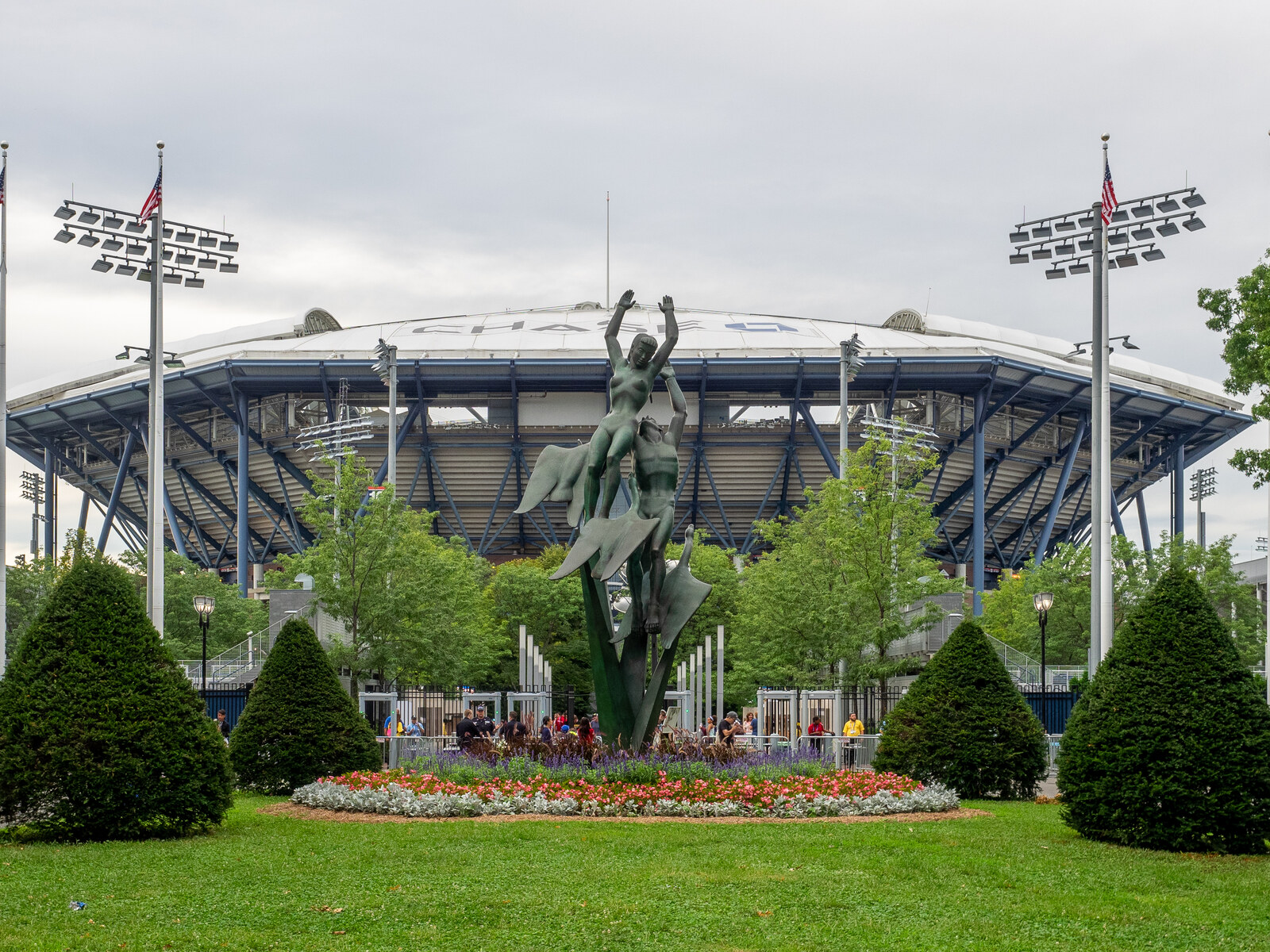
The US Open is the rare world-class sporting event that people in Bergen County treat as somebody else's problem. It is forty minutes away. Not forty minutes in the way a real estate listing means it — forty actual minutes, door to parking lot, if you leave at the right time.
And 2026 is the biggest one there has ever been. The tournament runs from August 23 through September 13: twenty-two days, the longest edition in the tournament's history. That is three full weekends of tennis in Queens, and most of it is far cheaper and far easier to attend than people assume.
The Schedule, and Why Fan Week Is the Secret
The main draw does not begin until Sunday, August 30. Everything before that is Fan Week, which opened Sunday the 23rd with Arthur Ashe Kids' Day and continues with qualifying and the Mixed Doubles Championship from Monday the 24th.
Here is the part that people who go every year already know and never quite say out loud: Fan Week is the best value in American sports. Grounds access during qualifying costs a fraction of a main-draw ticket, the outer courts are close enough that you can hear the strings, and the players practicing on them are frequently ranked inside the top fifty. You can stand four feet from a professional serve. In week two you will be watching that same person from three hundred feet up.
The finals bookend the whole thing — women's singles Saturday, September 12; men's singles Sunday, September 13. Those two days are a different financial universe. Everything in between is negotiable.
The Route: Go North of the Congestion Zone
This is the single most useful thing in this article, so it goes first.
Manhattan's congestion relief zone covers everything below 60th Street, and passenger cars pay $9 to enter it. The Lincoln Tunnel puts you out around 40th Street — inside the zone. The Holland Tunnel, same story. If you cross there and take the Queens-Midtown Tunnel or the Williamsburg Bridge, you are paying the congestion toll on top of the tunnel toll on top of parking, and you are doing it in Midtown traffic.
Take the George Washington Bridge instead. The GWB lands you at 178th Street, well north of the zone. From there:
GWB → Cross Bronx Expressway (I-95 east) → Whitestone Bridge (I-678 south) → Whitestone Expressway → Grand Central Parkway. The tennis center is signed off the Grand Central. From the Fort Lee side this is roughly 18 miles and, in genuinely light traffic, about 35 minutes.
The alternative is the Throgs Neck Bridge instead of the Whitestone, which lands you on the Cross Island Parkway and approaches Flushing from the east. It is usually a few minutes longer but it is the better bet when the Whitestone approach is stacked up, which happens more often than it should. Check both before you commit.
One thing worth knowing if you are new to New York parkways: the Grand Central, Cross Island and Whitestone are parkways, closed to commercial vehicles, with genuinely low stone bridges. A passenger car or an SUV is fine. A box truck or a vehicle with a tall roof box is not — take the expressways.
Parking, Honestly
Official parking is in the Citi Field lots immediately adjacent to the tennis center. The flat rate for a standard vehicle runs around $40 per day, and it is completely cashless — credit, debit, Apple Pay or Google Pay only. Do not show up with cash and a plan.
The main Citi Field lot puts you a five-to-ten-minute walk from the gates across the elevated boardwalk over the train tracks, which is a genuinely pleasant approach. The catch: that lot is only available on days the Mets are not home. Late August and September is a busy stretch of the baseball calendar, so check the Mets schedule against your session date before you assume anything. On conflict days, parking moves to smaller satellite lots and the walk gets longer.
Now the part nobody tells you. Getting out after a night session takes 30 to 45 minutes. The lots funnel toward a single exit approach on Corona Avenue and roughly ten thousand people try to use it simultaneously. This is not a traffic problem you can outsmart from inside the lot.
You can, however, plan around it. Either leave before the last match ends — unthinkable, we know — or go the other way and treat the exit as part of the evening. Stay in your seat through the trophy ceremony. Get food on the grounds. Let the lot drain for twenty minutes. You will get home at the same time either way, and one version of it involves sitting in a stadium instead of idling in a queue.
When Not to Drive
We rent cars, and we are still going to say this: if you are going alone or as a pair to a night session, take the train. The 7 line and the LIRR both stop at Mets–Willets Point, which is directly at the venue. The LIRR from Penn Station is about twenty minutes. There is no parking, no exit queue, and no designated driver problem after a long day in the sun with a drink or two.
Driving wins in three situations, and they are the situations most families are actually in. You have a group of four or more — the math flips hard against buying four round-trip rail tickets plus getting everyone to Penn. You have kids, and the difference between a seat in your own vehicle and a rush-hour 7 train after a five-hour day outdoors is not a small one. Or you are coming from somewhere the trains do not serve well, which is most of Bergen, Passaic and Rockland.
What to Bring, and What They Will Take Away
The grounds are enormous and almost entirely outdoors. Late August in Queens is hot, humid, and the sun sits directly on the outer courts all afternoon. Sunscreen, a hat, and an empty reusable water bottle — there are refill stations, and an empty bottle goes through the gate while a full one does not.
Bag rules are strict and enforced. Check the current dimensions on the tournament site before you leave the house, because the answer changes year to year and the bag check line is long and unhappy. Leave the good camera at home unless you have confirmed it is allowed; phones are always fine.
And bring a layer. A day session that starts at 88 degrees ends at 68 degrees under lights, and the wind comes off the bay.
Make a Day of It
You are in Flushing Meadows–Corona Park, which is worth an hour on its own. The Unisphere — the twelve-story steel globe from the 1964 World's Fair — is a ten-minute walk from the tennis center and photographs better than almost anything else in Queens. The Queens Museum sits beside it and holds the Panorama of the City of New York, a 9,335-square-foot scale model of all five boroughs that is quietly one of the best things in the city.
And you are a few minutes from downtown Flushing, which has a legitimate claim to the best and most varied Chinese food in the United States. Eating on the tennis center grounds is a $28 proposition. Eating on Main Street is a $12 proposition and a considerably better meal. Park once, do both.
The Car Part
Four adults and a cooler for eight hours is an SUV job, not a sedan job. A three-row means the group of six goes in one vehicle and pays one parking fee instead of two — which, at $40 a day, is most of the reason to consolidate in the first place.
If you are taking something electric, charge before you go. Charging in Flushing on a US Open Saturday is not a thing you want to be solving in real time, and the Citi Field lots are not a charging destination. Leave North Jersey full and you will not think about it again.
Twenty-two days. Three weekends. Forty minutes each way. There is no good excuse this year.
Follow the Adventure on Instagram
We'll be posting from the grounds during Fan Week. Tag us in your US Open shots and we'll share the best ones.
Follow @frostyflame_llcYour Ride to Flushing Meadows
One vehicle, one parking fee, and everyone gets home in the same car. Book a three-row for the group or an EV for the quiet run over the GWB.
View Our Fleet

Permalink: frostyflame.llc/blog/us-open-2026-driving-guide.html